10 Secrets to Mastering the Warm Rustic-Luxe Kitchen Aesthetic
The kitchen has long been cited as the heart of the home, but in recent years, the trend toward sterile, ultra-minimalist white boxes has stripped away much of that inherent warmth. However, a resurgence of traditional charm blended with rustic textures is bringing the ‘soul’ back into culinary spaces. The ‘Rustic-Luxe’ aesthetic, as exemplified by the inviting space in our feature image, strikes a perfect balance between high-end elegance and lived-in comfort. It is a style that whispers luxury rather than shouting it, prioritizing tactile materials like rich walnut woods, tumbled stone, and warm metals over cold synthetics.
Designing a space like this requires a nuanced understanding of layering. It isn’t simply about buying expensive cabinets; it is about how the light interacts with the backsplash, how the wood of the island grounds the room, and how ambient lighting transforms the space from a workstation to a social sanctuary after dark. This design philosophy champions the idea that a kitchen should feel as comfortable as a living room—a place where the smell of rising dough or brewing coffee feels right at home amidst high-end finishes. In this comprehensive guide, we will dissect the ten essential elements required to recreate this timeless, glowing aesthetic in your own home, ensuring your kitchen remains a beloved gathering spot for generations.
1. The Anchor: The Walnut Butcher Block Island
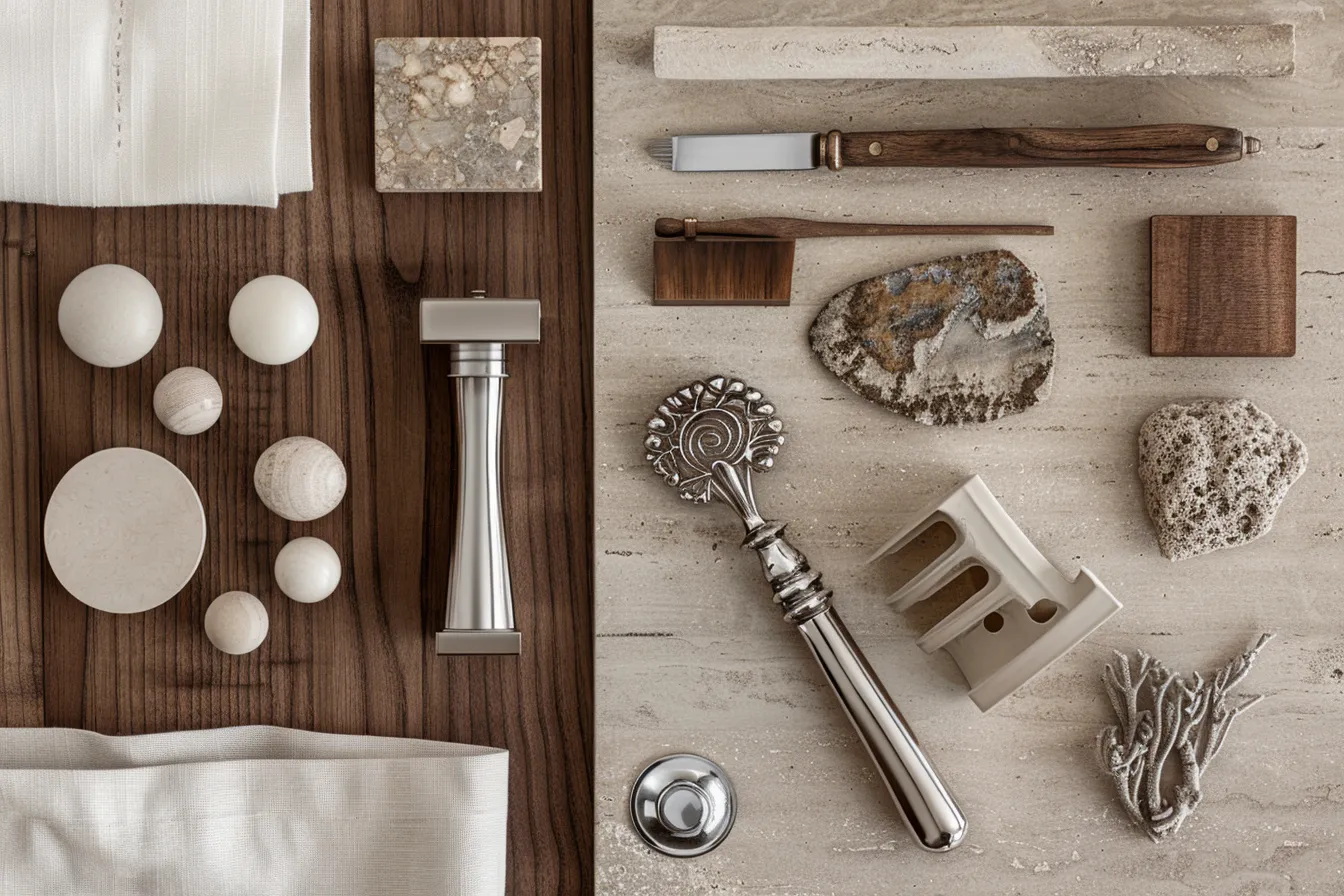
In any open-concept kitchen, the island serves as the visual and functional anchor of the room. For the rustic-luxe look, stepping away from cold quartz or marble and embracing a massive, thick-cut wood countertop is a game-changer. As seen in the image, a walnut butcher block top adds an immediate injection of organic warmth that stone simply cannot replicate. It transforms the island from a mere prep surface into a piece of furniture that invites touch and gathering.
Functionally, wood countertops are forgiving and quiet, absorbing the clatter of dishes rather than amplifying it. Aesthetically, the rich dark tones of walnut or mahogany provide a stunning contrast against lighter cabinetry, grounding the airy space. To maintain this high-end look, the wood requires regular oiling, which deepens the color and enhances the grain over time. This ‘living finish’ means the surface gets better with age, developing a patina that tells the story of the meals prepared and the memories shared. When designing your island, ensure the slab is substantial—at least two to three inches thick—to communicate luxury and durability, establishing it as the undisputed centerpiece of the kitchen.
2. Creamy Cabinetry: A Soft Alternative to White
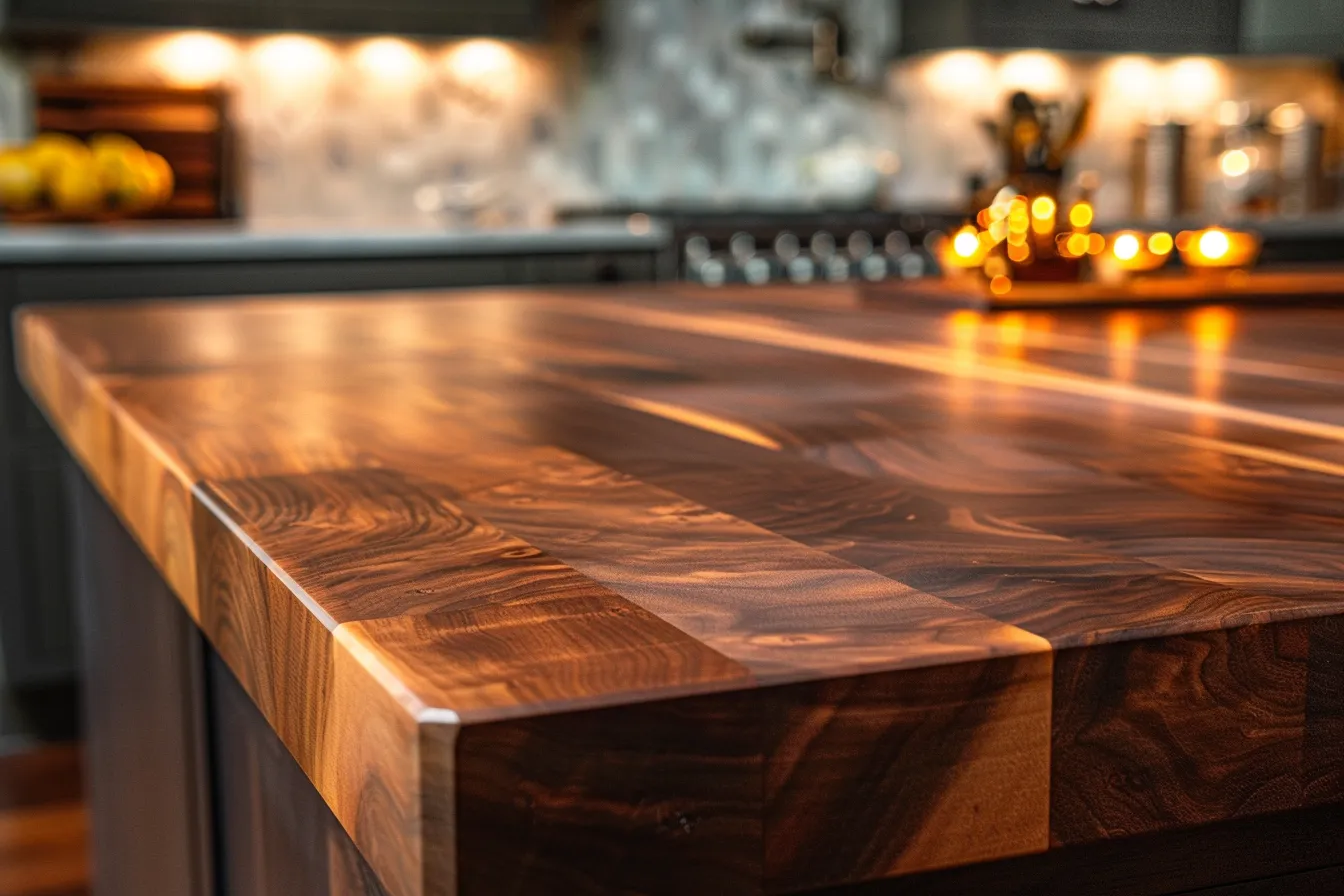
While stark white kitchens had their moment in the sun, the rustic-luxe aesthetic calls for something softer, warmer, and more forgiving. Cream, ivory, or soft beige cabinetry provides the perfect backdrop for this style. Unlike clinical white, which can feel cold under artificial light, creamy undertones reflect a golden glow that instantly makes the room feel cozy and inviting. This color choice pairs exceptionally well with natural wood elements and warm metal hardware, creating a harmonious palette that feels cohesive rather than high-contrast.
The cabinetry style itself should lean towards traditional or transitional. Raised panel doors or shaker styles with detailed beading add depth and shadow lines that flat-front modern cabinets lack. This architectural detailing contributes to the sense of history and craftsmanship essential to the look. Furthermore, utilizing ‘glazed’ finishes on the cream paint can settle into the crevices of the woodwork, subtly highlighting the intricate details of the molding. This technique adds an antique quality that prevents the kitchen from looking too ‘new’ or mass-produced. Ultimately, creamy cabinetry acts as a neutral but warm canvas, allowing the bolder textures of the wood and stone to shine without competing for attention.
3. Layered Lighting: The Secret to Ambiance
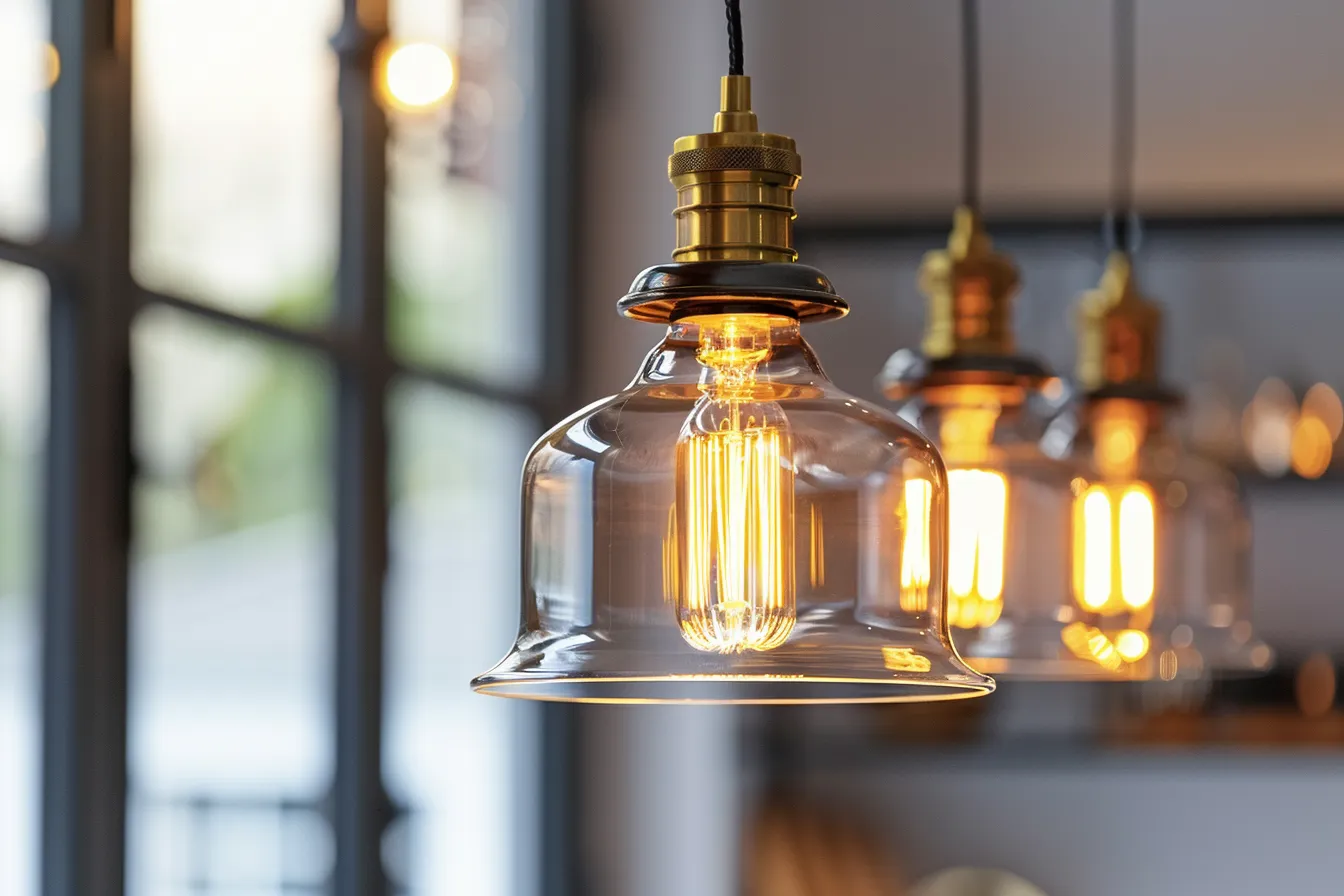
Lighting is arguably the most critical factor in achieving the warm, glowing atmosphere seen in luxury kitchens. A single overhead light source is insufficient; instead, you must employ a layered approach. This involves mixing task lighting, ambient lighting, and accent lighting to create a flexible environment that works for both cooking and entertaining. In our example, the industrial glass pendant lights serve as the jewelry of the room, drawing the eye down to the island while providing necessary task lighting for food preparation.
Beyond the pendants, recessed ceiling lights (cans) provide general illumination, but the real magic happens with dimmers. The ability to lower the intensity of the lights transforms the mood instantly. Additionally, under-cabinet lighting is non-negotiable in a high-end kitchen. It illuminates the backsplash, highlighting the texture of the tile, and provides a focused beam on the countertops for chopping and reading recipes. Finally, don’t underestimate the power of decorative lighting—candles, as shown on the island, or even small table lamps tucked into corners, add a flickering, organic light source that softens the hard edges of appliances and cabinetry, making the kitchen feel intimately cozy.
4. The Art of the Backsplash
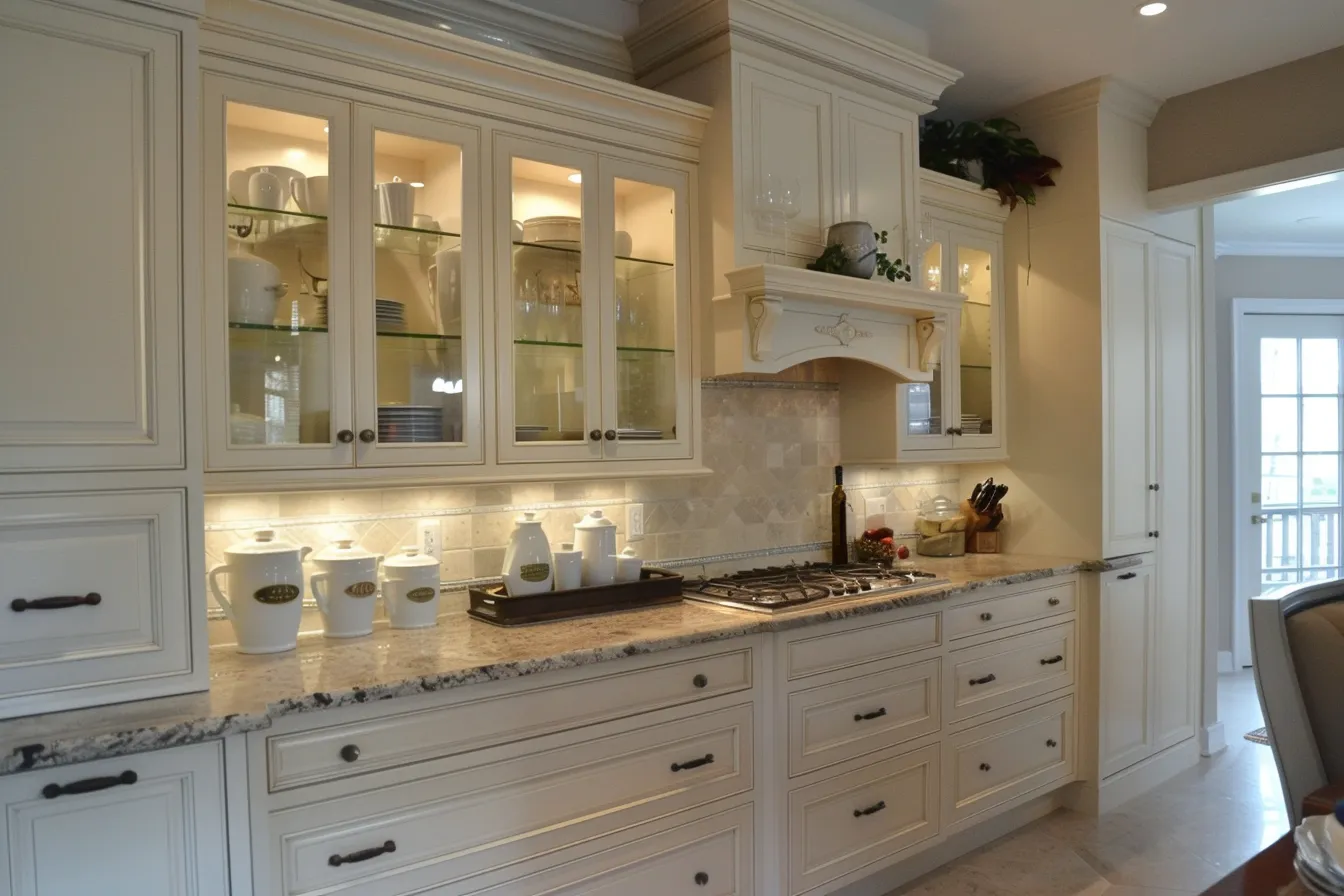
The backsplash is often referred to as the focal point of the kitchen’s vertical space, and in a rustic-luxe design, it is the perfect place to introduce pattern and texture. Rather than a standard subway tile, this aesthetic favors intricate mosaics, hand-painted tiles, or natural stone with tumbled edges. The goal is to introduce a sense of Old World charm that feels curated and artisanal. Warm earth tones—golds, ochres, terra cottas, and creams—should dominate the palette to tie in with the wood and cabinetry.
The installation pattern matters just as much as the material. A diagonal lay or a complex geometric motif adds dynamic energy to the walls without being overwhelming. In the featured design, the patterned tile behind the range acts as a tapestry, breaking up the expanse of cabinetry and drawing the eye to the cooking zone. When selecting your backsplash, consider how the tile reflects light. Glossy finishes will bounce light around the room, making it feel larger, while matte or tumbled finishes absorb light, contributing to a softer, more rustic feel. The backsplash is your opportunity to inject personality and artistic flair into the functional space.
5. Grounding with Natural Stone Flooring
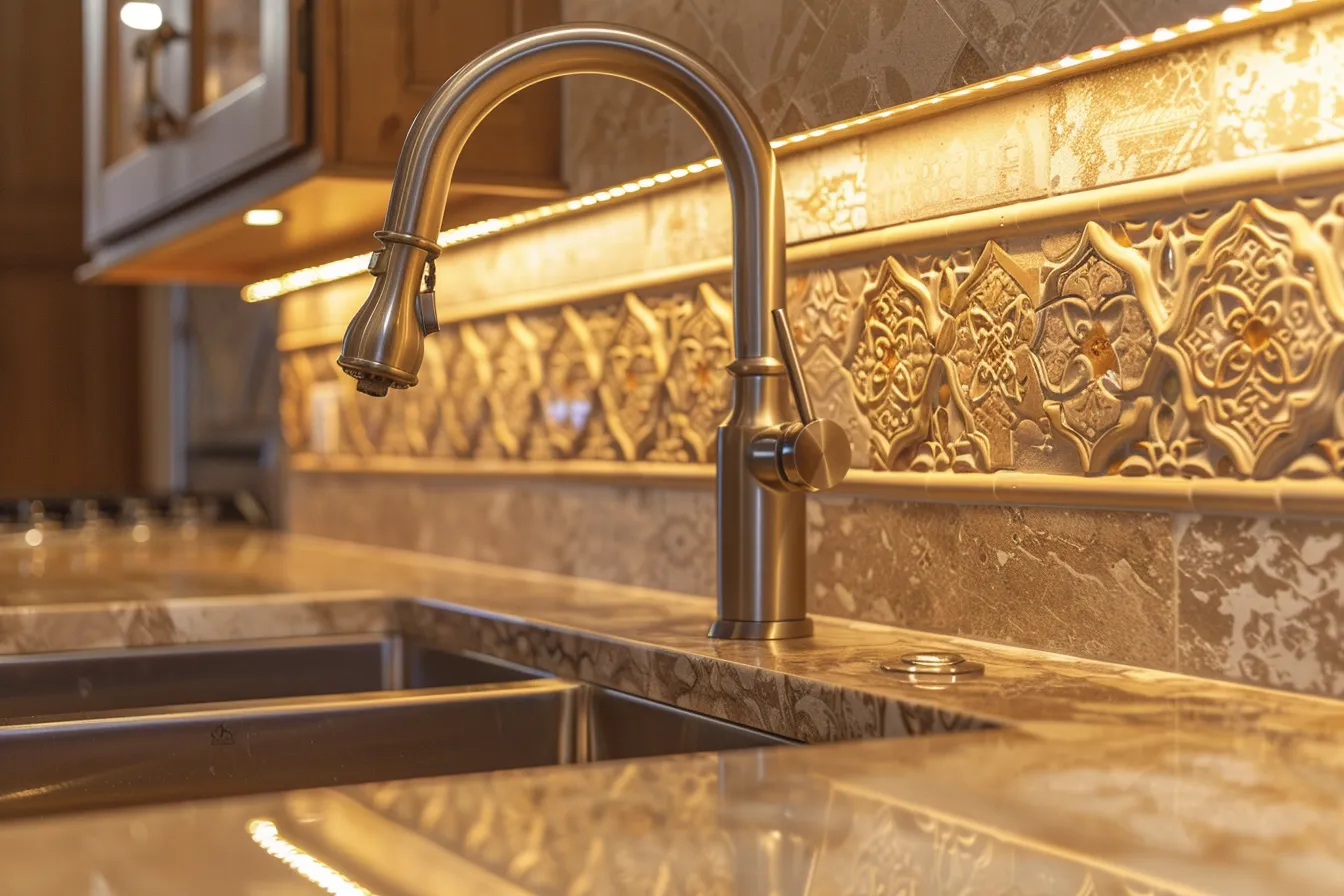
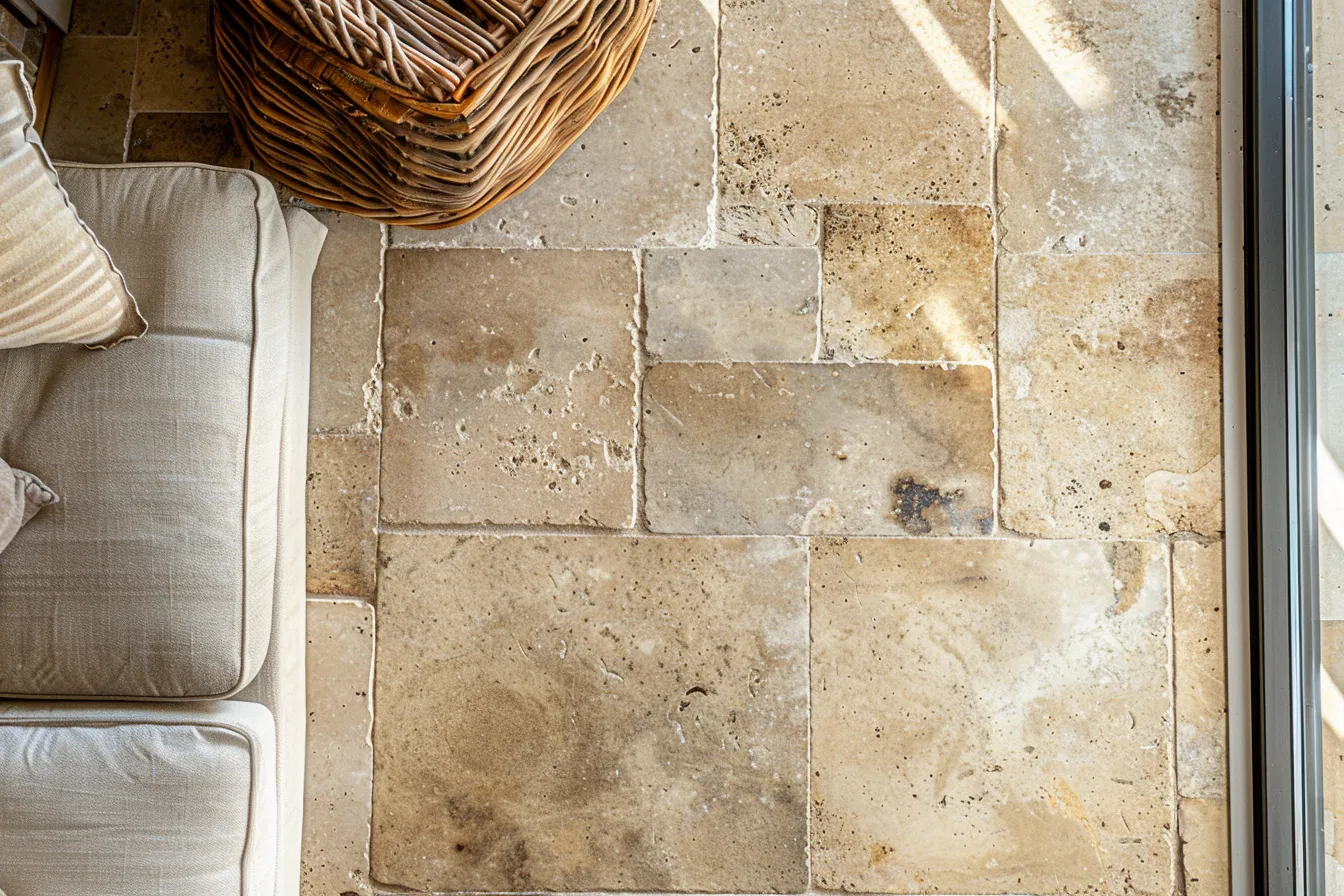
Flooring is the foundation of any room, and for a kitchen that aims to be both rustic and luxurious, natural stone is the premier choice. Materials like travertine, limestone, or slate offer a tactile quality and variation in color that manufactured tiles cannot mimic. The irregularities in natural stone—the pits, veins, and subtle shifts in hue—add character and an sense of permanence to the home. In a warm kitchen design, opt for stones in beige, tan, or warm gray tones rather than cool blues or blacks.
A popular layout for this aesthetic is the Versailles pattern, which uses four different sizes of tile to create a puzzle-like, non-repeating appearance that looks historic and high-end. While stone is hard underfoot, it is an excellent conductor for radiant floor heating, a hidden luxury that adds physical warmth to the visual warmth of the room. If natural stone feels too high-maintenance, high-quality porcelain tiles that mimic the look of tumbled travertine are a viable alternative. However, the key is to ensure the texture looks convincing. The floor should look as though it has been there for a century, grounding the lighter elements above it.
6. Glass Fronts and Open Display
To prevent a kitchen full of cabinetry from feeling heavy or imposing, incorporating glass-fronted cabinets is a brilliant design strategy. These cabinets break up the solid walls of wood and add depth to the room by allowing the eye to travel through to the back of the cabinet. They also offer a designated space to display beautiful dishware, glassware, or heirlooms, turning everyday items into decor. This aligns perfectly with the ‘rustic-luxe’ philosophy of merging utility with beauty.
Lighting inside these glass cabinets is a detail that elevates the entire room. Soft LED strips installed vertically inside the cabinet frame can cast a gentle glow on the contents, turning the cabinets into light boxes in the evening. This adds another layer to the ambient lighting scheme discussed earlier. Stylistically, you can choose between clear glass for a modern, crisp look, or seeded/textured glass for a more vintage, obscured appeal. The muntins (the wooden grids on the glass) can also be customized to match the traditional vibe of the room. This transparency makes the kitchen feel more open, airy, and curated, rather than just a storage facility.
7. Bringing the Outdoors In: Greenery
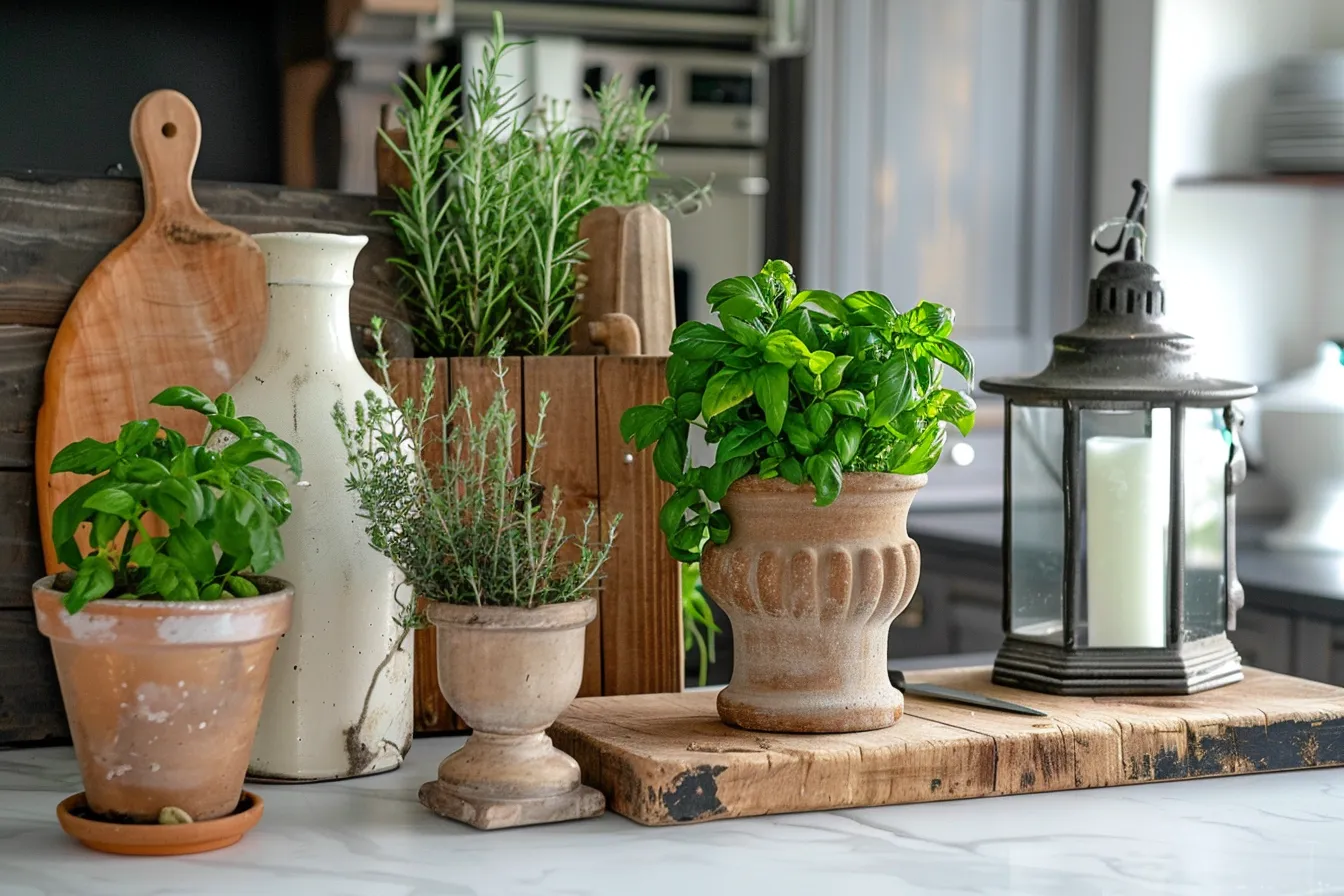
No warm, rustic kitchen is complete without the element of life, and that comes from greenery. Plants soften the hard lines of architecture and introduce a vibrant pop of organic color that enlivens the warm neutral palette. Whether it’s a manicured topiary, a sprawling fern, or pots of culinary herbs like basil and rosemary on the countertop, plants bridge the gap between the indoors and the natural world outside. This connection to nature is fundamental to the rustic aesthetic.
Beyond aesthetics, herbs serve a functional purpose in a chef’s kitchen, providing fresh flavors within arm’s reach. The choice of planter is also an opportunity to reinforce the design style; terra cotta pots, woven baskets, or aged metal buckets fit the theme perfectly. In the evening, the shadows cast by the leaves against the creamy cabinetry add visual interest and movement. If natural light is scarce, high-quality faux botanicals can achieve a similar visual effect, but nothing beats the scent of fresh rosemary in a warm kitchen. It signals that the space is alive, used, and loved—a crucial component of the cozy, lived-in luxury we are aiming to achieve.
8. The Power of Warm Metals
In the era of modern minimalism, chrome and stainless steel reigned supreme. However, the warm rustic-luxe kitchen embraces a mixed-metal approach, often favoring warmer tones like unlacquered brass, oil-rubbed bronze, or copper. These metals age beautifully, developing a patina that adds to the ‘old world’ charm. While stainless steel appliances are standard for their durability and professional look (as seen in the range), the hardware—knobs, pulls, and faucets—can be the jewelry that warms up the room.
Mixing metals is an art form. A safe bet is to use stainless steel for the major appliances and a warmer metal for the cabinet hardware and light fixtures. For example, the dark bronze or black iron of the pendant lights in the image contrasts beautifully with the light ceiling and cabinets, anchoring the space overhead. This contrast prevents the room from looking too monochromatic. When selecting hardware, choose pieces with weight and substance; flimsy handles can cheapen the look of heavy wood cabinets. The tactile experience of gripping a solid brass handle reinforces the sense of quality and luxury every time you open a drawer.
9. Texture Overload: The Tactile Experience
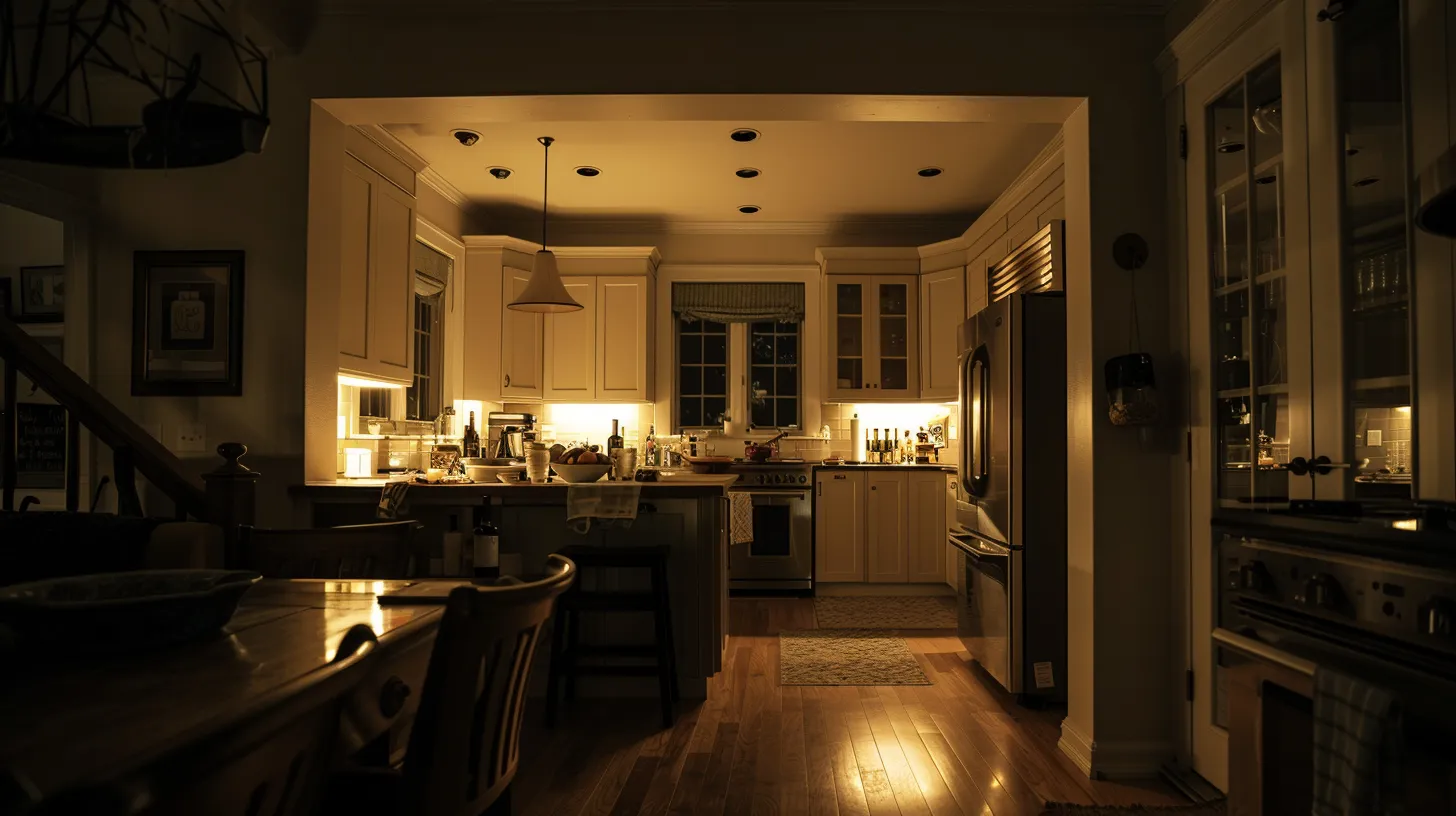
A monochrome or neutral color palette relies heavily on texture to prevent the space from feeling flat or boring. In the featured kitchen, we see a masterclass in texture layering. You have the smooth, cool surface of the glass pendants, the rough, porous nature of the travertine floor, the polished grain of the wood island, and the raised relief of the tile backsplash. Each of these textures interacts with light differently, creating a rich visual landscape that changes throughout the day.
To replicate this, you must be intentional about your material selection. Don’t match everything perfectly. If your cabinets are smooth paint, choose a backsplash with relief. If your countertops are honed matte stone, perhaps your hardware should have a sheen. Soft textures are equally important; incorporate fabric elements like linen roman shades, upholstered bar stools, or a vintage runner rug to absorb sound and add softness. This interplay of rough and smooth, hard and soft, matte and shiny is what gives a room ‘depth.’ It makes the space feel established and collected over time, rather than purchased from a single catalog page.
10. The Hearth Concept: The Range Enclosure
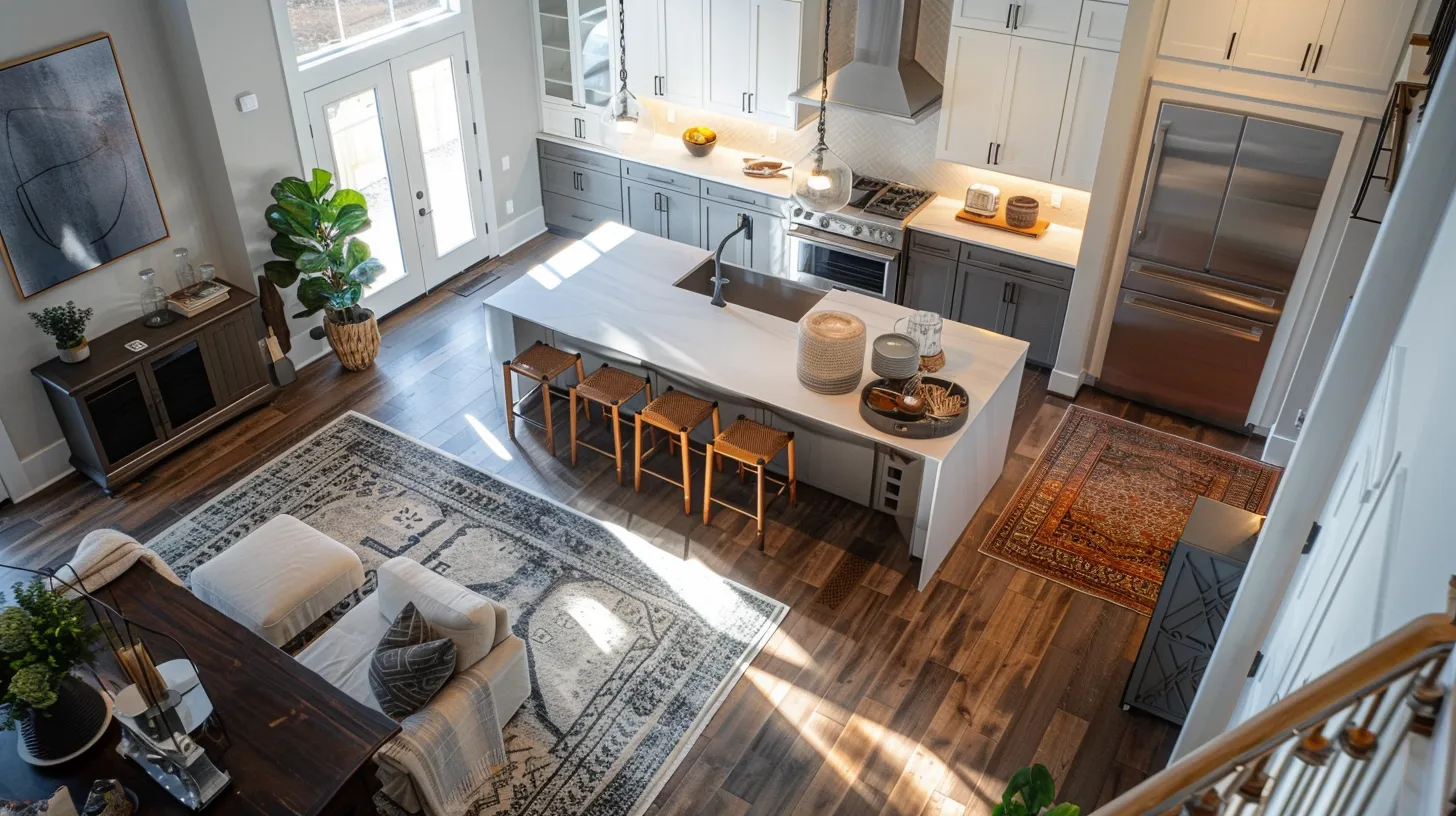
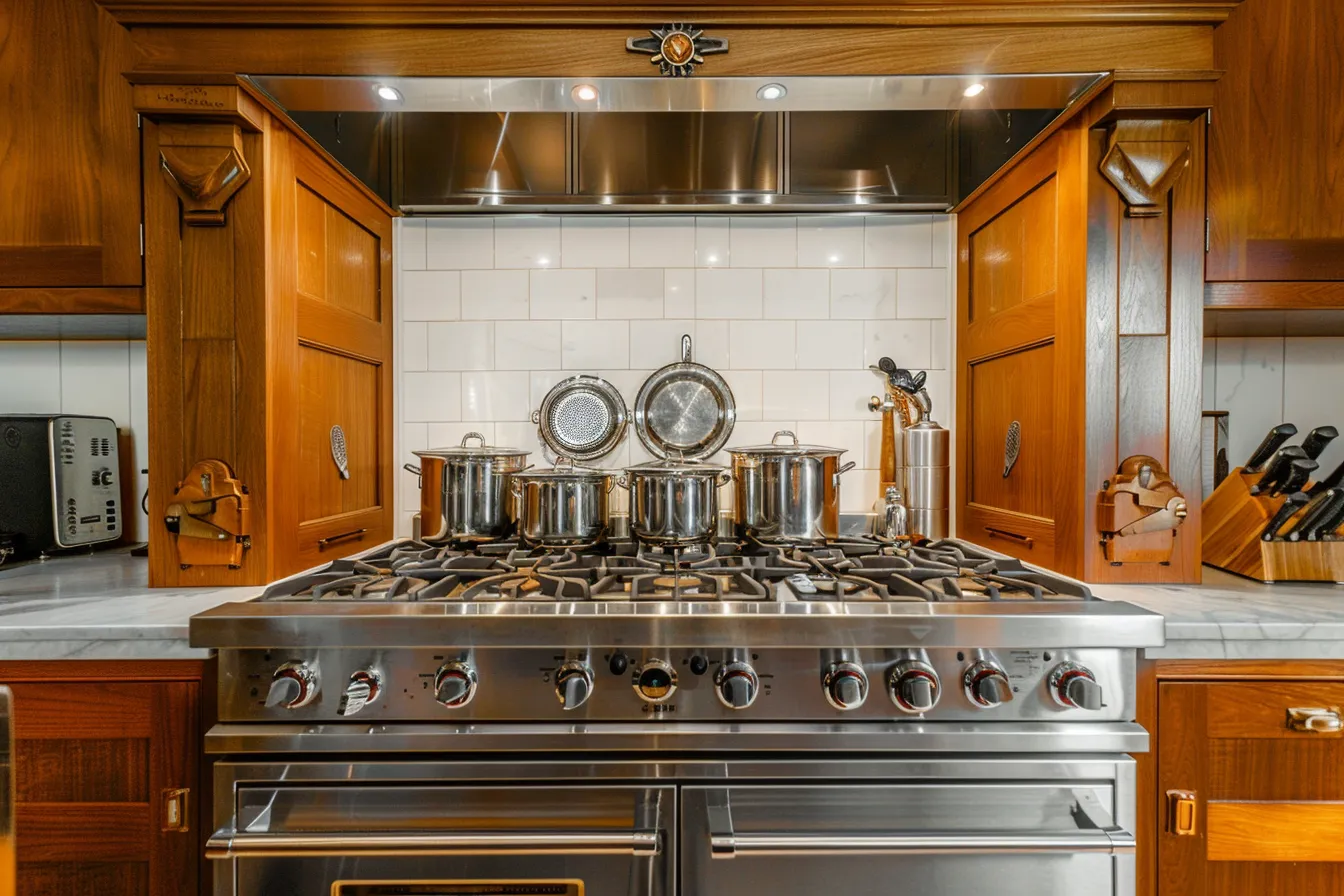
Historically, the hearth was the center of the home, providing heat and food. In modern design, we replicate this feeling by creating a focal point around the cooking range. A professional-grade range is a luxury item, but housing it within a custom enclosure or mantle elevates it to a design feature. In the image, the range is framed by cabinetry and a dedicated ventilation hood that blends seamlessly with the upper cabinets. This ‘hearth’ effect commands attention and signifies the room’s purpose.
Designing a custom hood enclosure allows you to hide the industrial-looking ventilation liner behind wood paneling or plaster, keeping the aesthetic consistent with the rest of the cabinetry. Flanking the range with corbels or spice pull-outs adds convenience and architectural interest. This area is also prime real estate for a ‘pot filler’ faucet—a plumbing luxury that adds a professional chef vibe. By treating the cooking area as a mantlepiece, you create a symmetrical, balanced focal point that anchors the wall and draws family and guests toward the warmth of the cooking, reinforcing the kitchen as the true heart of the home.
Conclusion
Achieving the warm, rustic-luxe kitchen is not about adhering to a rigid set of rules, but rather about cultivating a feeling. It is the pursuit of a space that feels timeless, where modern conveniences are wrapped in the comforting embrace of traditional materials and warm lighting. By prioritizing elements like the butcher block island, layered lighting, and textural diversity, you move beyond the sterile showroom look and create a space that has a soul.
This design style acknowledges that the kitchen is no longer just a utility room; it is the backdrop for life’s most intimate moments—morning coffees, late-night conversations, and holiday feasts. The investment in high-quality materials like natural stone and solid wood ensures that the kitchen will not only withstand the wear and tear of daily life but will grow more beautiful with age. As you embark on your design journey, remember that the goal is balance: balance between the old and the new, the rough and the smooth, the functional and the beautiful. With these ten secrets, you are well on your way to crafting a kitchen that is as inviting as it is impressive.