10 Ways to Build a Moody Botanical Gaming Sanctuary (That Actually Looks Grown-Up)
The era of the sterile, blindingly bright, RGB-flooded gaming room is officially over. Today’s modern gamer and remote worker craves something more grounded, more sophisticated, and infinitely more relaxing. Welcome to the moody botanical gaming sanctuary—a design philosophy that seamlessly bridges the gap between high-end technology and the calming, raw aesthetics of the natural world. This isn’t just about throwing a few plastic plants next to a monitor; it is a deliberate, highly curated approach to interior design that prioritizes mental well-being, tactile comfort, and immersive focus. By embracing a darker color palette, you inherently reduce visual fatigue and screen glare, creating a cave-like coziness that makes long hours at the desk feel like a retreat rather than a chore. Layering in rich, natural textures like raw walnut, textured linen, and distressed leather brings a necessary warmth to the cold, hard edges of monitors and PC cases. Most importantly, the integration of abundant, living greenery acts as a psychological anchor. Biophilic design has been scientifically proven to lower stress levels, improve air quality, and boost cognitive function. In this comprehensive guide, we are going to tear down the traditional ‘gamer aesthetic’ and rebuild it from the ground up. You will learn exactly how to master the complex interplay of dark wall treatments and warm ambient lighting. We will dive deep into spatial arrangement, teaching you how to layer organic textures against industrial materials. You will discover the secrets of bias lighting to protect your eyes, the specific plant species that thrive in lower-light tech environments, and the styling tricks that make a room look intentionally curated rather than cluttered. Whether you are battling bosses, coding late into the night, or just seeking a quiet corner to decompress, these ten transformative steps will help you craft a space that is as deeply beautiful as it is functional.
1. Embrace the Dark Canvas: Wall Textures and Tones
The foundation of a moody botanical sanctuary begins entirely with the walls. White walls bounce light aggressively, creating glare on your monitors and stripping the room of any cozy intimacy. To achieve this look, you must commit to the dark canvas. We are talking about deep, saturated tones: charcoal greys, faded off-blacks, deep forest greens, or even a rich, oxidized navy. However, color alone is not enough; texture is the secret ingredient that elevates the space from feeling like a dark box to feeling like a high-end architectural loft. Consider applying a concrete-effect limewash or a Roman clay finish to your walls. These applications create a subtle, mottled effect that absorbs light beautifully and adds a raw, industrial backdrop that contrasts perfectly with organic elements. If plastering is out of the question, a high-quality matte paint is essential—never use satin or semi-gloss in a moody room, as the reflections will ruin the ambient vibe. The psychology behind this dark envelopment is crucial for a gaming or working space. It effectively blurs the boundaries of the room, drawing your absolute focus to the glowing screens and the illuminated tasks in front of you. It creates a ‘cocoon’ effect that signals to your brain that it is time to focus or unwind. When styling, don’t be afraid to paint the ceiling as well for a true color-drenching effect, which can actually make low ceilings feel higher by obscuring the exact corners of the room. This dark backdrop is what will eventually make your green plants and warm woods pop with incredible vibrancy.
2. Biophilic Integration: The Indoor Jungle
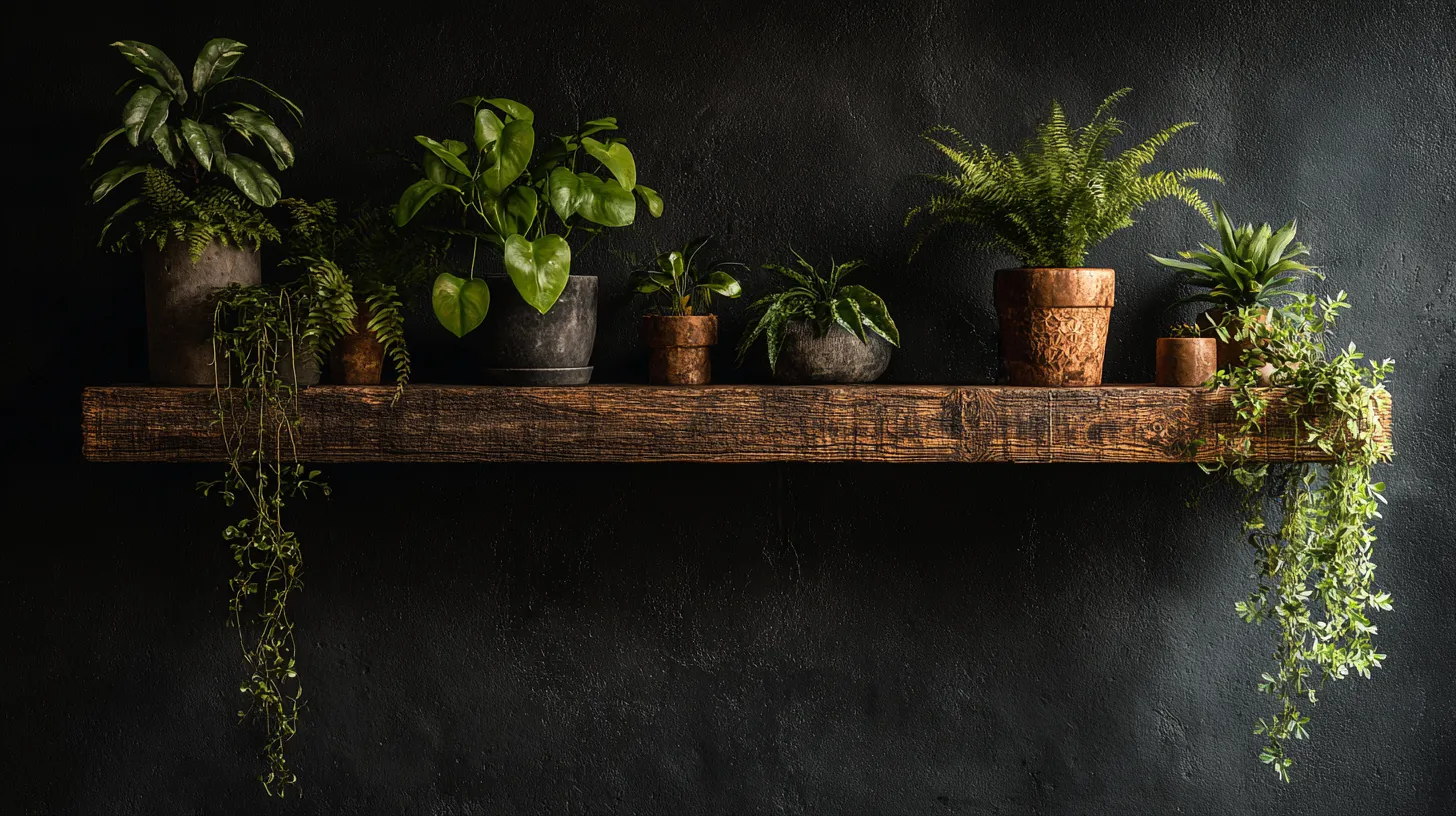
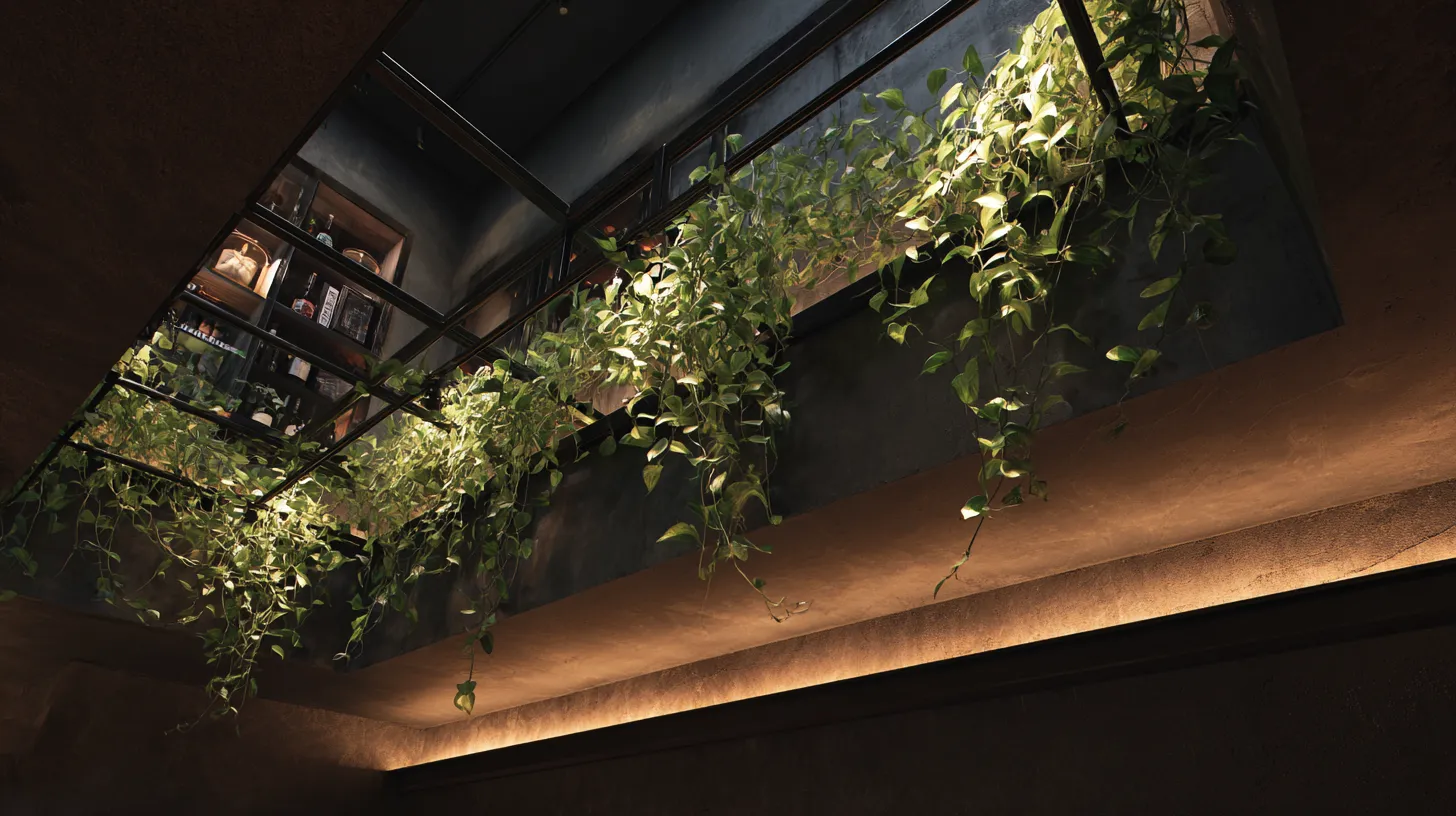
A dark room can quickly become oppressive without the introduction of life. This is where biophilic design—the concept of connecting indoor spaces with nature—takes center stage. You are not just placing plants; you are cultivating an indoor jungle that softens the rigid, digital nature of your gaming hardware. The key to making this look authentic rather than staged is verticality and layering. Utilize floating shelves high above your monitors to house trailing plants. Golden Pothos, Heartleaf Philodendrons, and trailing succulents are incredibly resilient, require minimal watering, and their cascading vines create a natural curtain that frames your digital workspace. On the desk surface, incorporate smaller, structured plants like a ZZ Plant or a Snake Plant; these are virtually indestructible and thrive in the ambient, lower-light conditions typical of a moody room. To ensure your plants survive without blasting the room with harsh overhead light, invest in full-spectrum LED grow bulbs that can be screwed into standard, stylish desk lamps. This allows you to nourish your greenery while maintaining the warm, moody aesthetic. The contrast of vibrant, organic green leaves against a stark charcoal or concrete wall is visually intoxicating. Furthermore, having living things in your peripheral vision while staring at screens drastically reduces eye fatigue and mental burnout. Remember to mix your planters—use a combination of raw terracotta, matte black ceramic, and aged brass to add another layer of visual interest to your botanical display.
3. The Anchor: Investing in Heavy Wood Tones
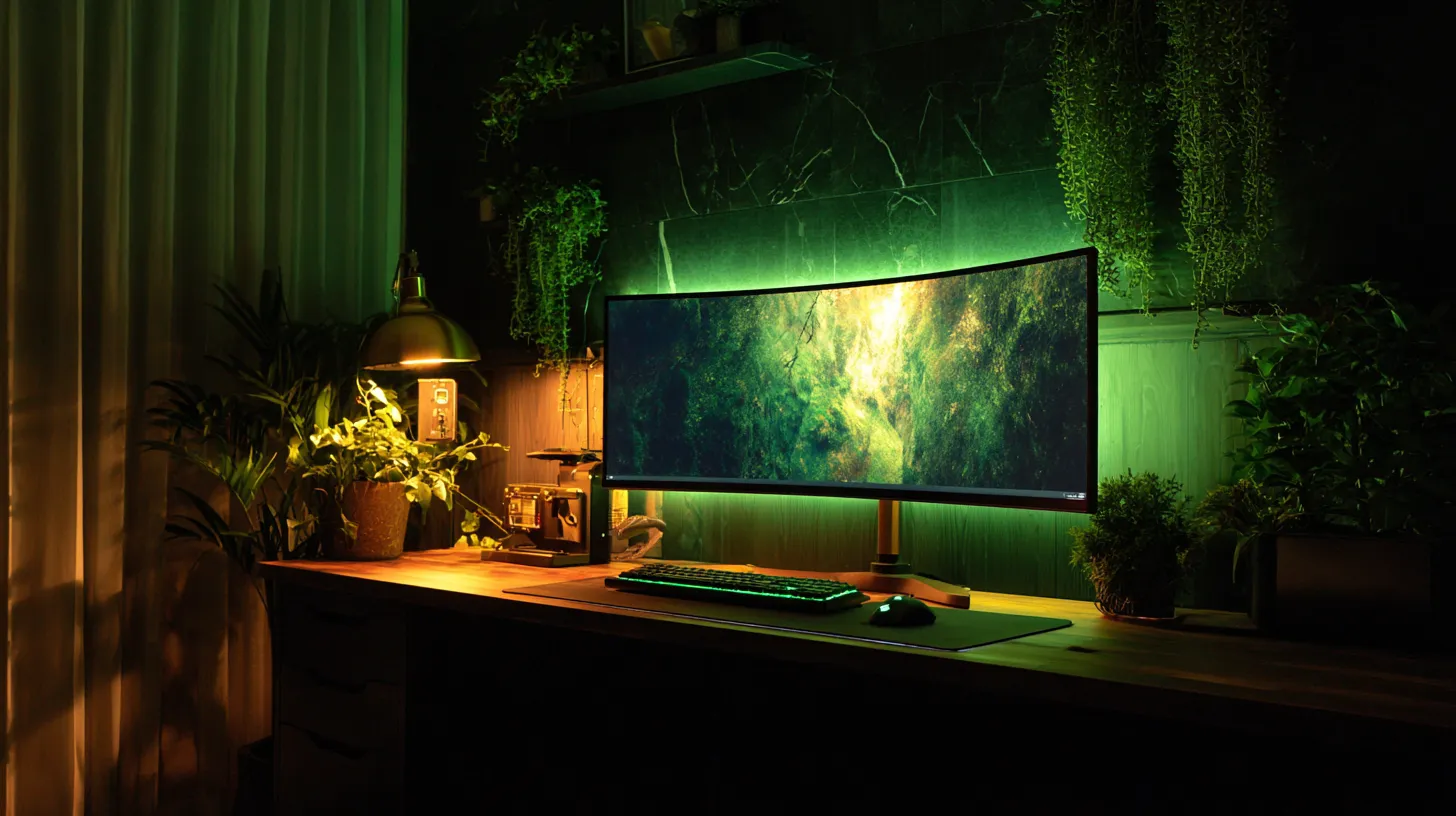
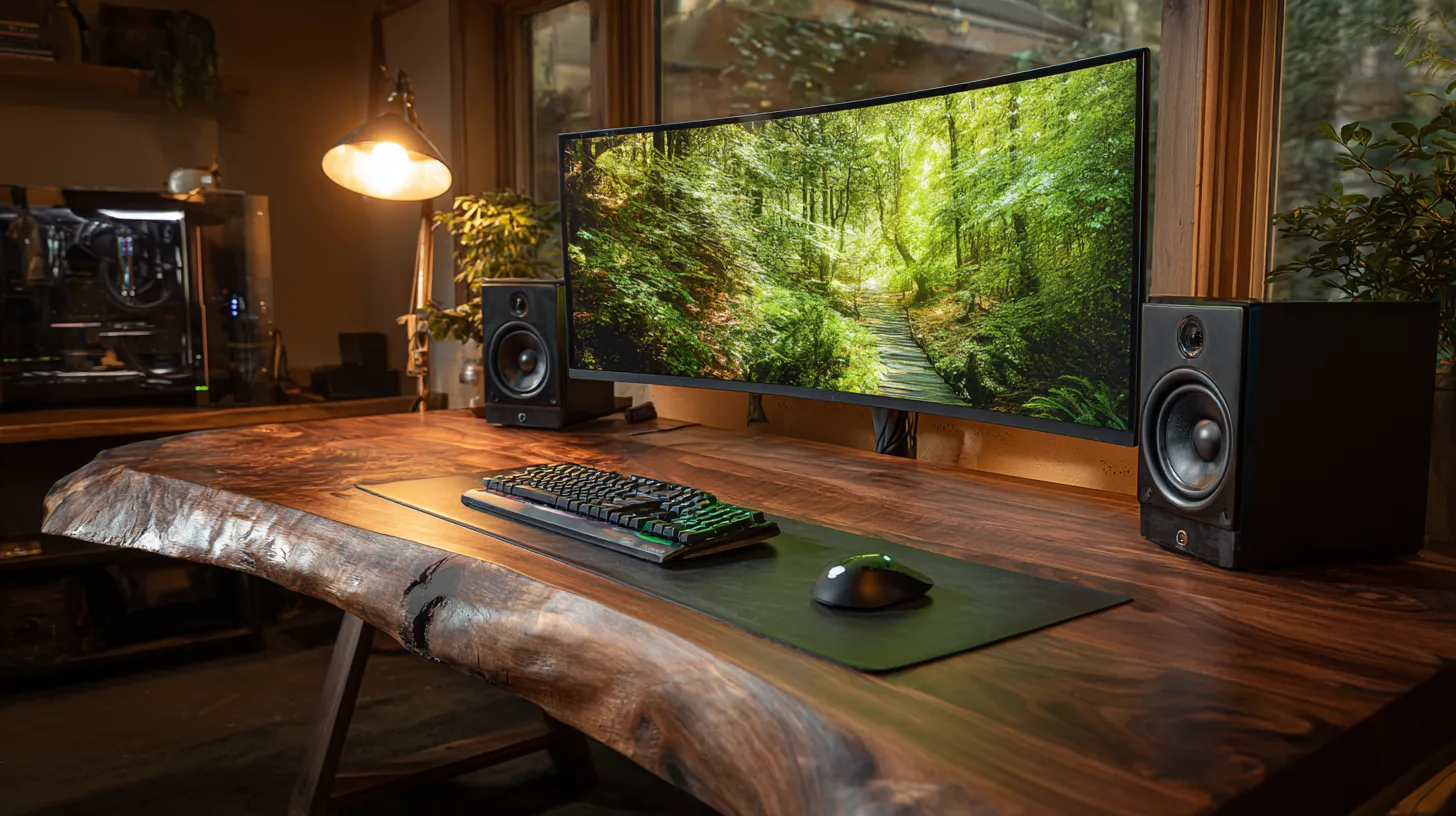
In a room dominated by dark walls and sleek black electronics, your desk cannot simply be a flimsy piece of manufactured particle board. The desk is the anchor of the room, the command center, and it needs visual weight and warmth to ground the entire aesthetic. Opt for solid wood with rich, warm undertones—walnut, acacia, or stained mango wood are exceptional choices. A live-edge desk, where the natural, irregular contour of the tree trunk is preserved, brings an unparalleled level of organic beauty to the space. The tactile experience of resting your arms on real, textured wood grain while interacting with a plastic keyboard is a grounding juxtaposition. When selecting your desk, depth is just as important as width. Ultrawide monitors and deep studio speakers require substantial real estate; aim for a desk depth of at least 30 to 36 inches to ensure your screens aren’t sitting too close to your eyes. If a solid slab of premium wood is outside your budget, a high-quality butcher block countertop sourced from a hardware store, finished with a dark tung oil and mounted on sturdy industrial iron legs, provides the exact same high-end aesthetic at a fraction of the cost. The warmth of the wood acts as a bridge between the cold, industrial concrete walls and the soft, organic plant life. To protect the wood and add a functional aesthetic touch, use an oversized, matte black leather or heavy felt desk mat. This protects the surface while providing a unified stage for your keyboard and mouse.
4. Masterful Illumination: Bias Lighting and Ambiance

Lighting is the single most critical element in a moody aesthetic. If you get the lighting wrong, the room feels like a depressing cave; get it right, and it feels like a cinematic masterpiece. The golden rule is to completely abandon your harsh, overhead ceiling light. Instead, rely on a meticulously layered system of ambient, task, and accent lighting. Let’s start with the most important ergonomic feature: bias lighting. Placing an LED light strip on the back of your monitor, casting a glow against the dark wall behind it, dramatically reduces the contrast between your bright screen and the dark room. This prevents eye strain and headaches during marathon gaming or working sessions. While you can use any color, a deep, emerald green bias light beautifully complements the botanical theme and enhances the vibrancy of your plants. Next, add warm task lighting. A retro-industrial desk lamp featuring an Edison-style bulb or a smart LED bulb set to a warm 2700K color temperature creates a cozy, inviting pool of light exactly where your hands rest. Finally, incorporate low-level ambient lighting throughout the room to create depth. This could be a small floor can-light tucked behind a large potted plant, casting dramatic leafy shadows on the ceiling, or a dim, warm bulb inside your PC case. The goal is to create ‘pools’ of light and deliberate shadows, allowing the eye to travel through the space and discover different textures, rather than illuminating everything at once.
5. Tactile Comfort: Layering Textiles and Bedding
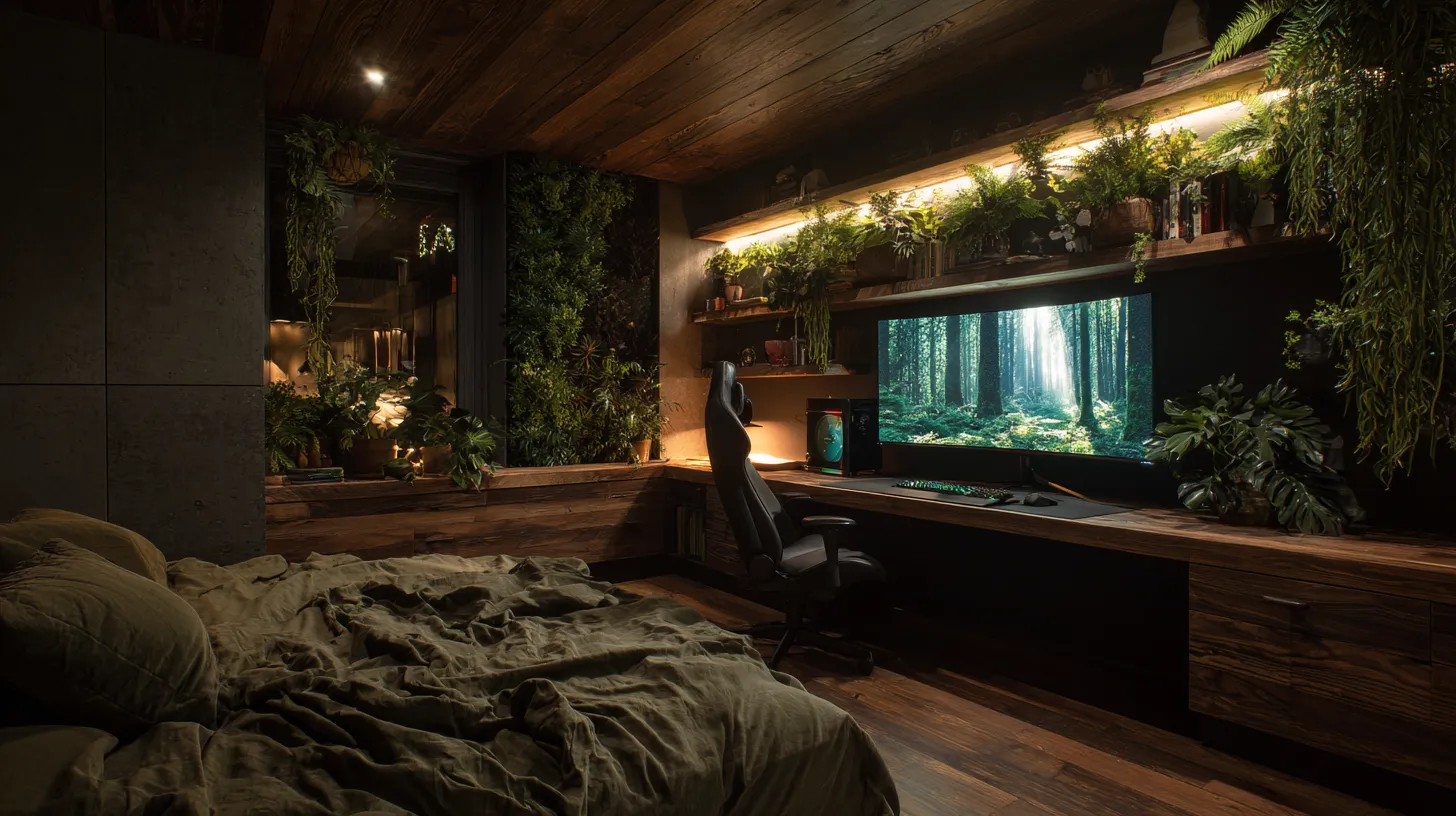
Because the bones of this room are inherently hard and industrial—concrete, iron, wood, and glass—you must aggressively introduce softness through textiles to achieve true comfort. If this space doubles as a bedroom, the bed is your largest opportunity to inject tactile coziness. Ditch the crisp, hotel-white percal sheets and embrace the rumpled, effortless look of pure linen. Linen has a natural, matte texture that absorbs light and looks incredibly inviting even when unmade. Choose bedding in earth tones that complement the room’s palette: olive greens, deep terracottas, muted mustards, or charcoal greys. Layering is essential. Start with your linen duvet, add a heavy, chunky knit throw blanket at the foot of the bed, and utilize a mix of pillows varying in size and fabric—think a blend of velvet, washed cotton, and subtle woven patterns. This creates a bed that looks like a plush sanctuary you want to collapse into after a long session at the desk. The textile treatment shouldn’t stop at the bed. A large, vintage-inspired rug placed under the bed or desk is crucial for sound dampening and visual warmth. Look for distressed Persian or overdyed Turkish styles in faded, moody colors. The deliberate wear-and-tear of a vintage rug adds a layer of history and character that prevents the room from feeling like a sterile, out-of-the-box catalog display. Even heavy, dark velvet or linen blackout curtains can be added to the windows to improve acoustics, block out unwanted daylight for gaming, and add massive vertical strokes of soft texture to the room.
6. The Command Seat: Ergonomics Meets Aesthetics

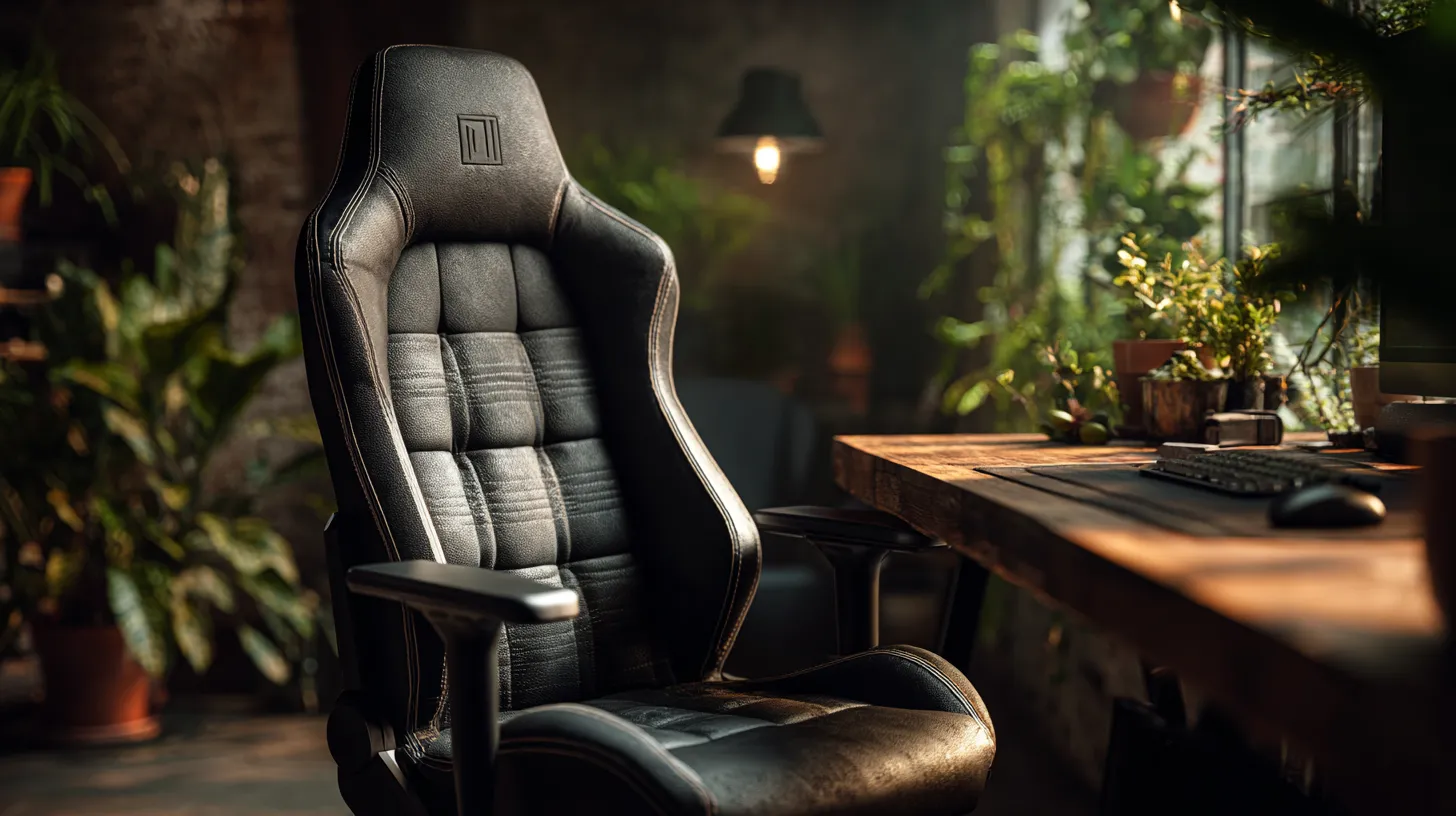
The chair you choose to sit in for hours on end is where form must relentlessly meet function. The traditional ‘racing-style’ gaming chair, with its bright neon accents, sharp angles, and excessive branding, will instantly destroy the mature, botanical aesthetic you are trying to build. However, you absolutely cannot sacrifice the lumbar support, adjustability, and ergonomics that a good chair provides. The solution is to seek out high-end, stealthy ergonomic office chairs or premium executive chairs. Look for materials that fit the narrative of the room: supple top-grain black or dark brown leather, high-quality dark grey breathable mesh, or even deep-toned fabrics. A chair with a matte black aluminum or dark graphite frame will blend seamlessly into the shadows of the room, rather than screaming for attention. When styling the chair within the room, consider draping a small, textured sheepskin throw or a dark wool blanket over the backrest when not in use. This simple trick immediately softens the highly engineered look of the chair, tying it back into the cozy, tactile nature of the bedding and rugs. Remember, true luxury is invisible comfort. Your chair should support your spine perfectly through a grueling gaming raid or a deep-work coding session, while looking like a sophisticated piece of mid-century or modern industrial furniture that belongs in a high-end architectural digest, not a teenager’s basement.
7. Acoustic Design: Sound as a Physical Element

In a room designed for immersion, audio is not just something you hear; it is a physical element that shapes the environment. High-quality sound requires proper hardware, and standard plastic computer speakers simply won’t cut it, neither sonically nor visually. Invest in a pair of solid, matte black studio monitors. These speakers have a heavy, industrial presence that perfectly complements the raw wood desk and dark walls. To get the best sound and the best look, elevate them on dedicated metal speaker stands or high-density acoustic isolation pads. This prevents the sound vibrations from rattling your wooden desk and angles the tweeters directly at your ears for a perfect soundstage. However, great speakers in a room with hard floors and concrete walls will result in terrible, echoing audio. You must incorporate acoustic treatment, but traditional foam wedges look cheap and out of place in a sophisticated sanctuary. Instead, integrate acoustic design invisibly. The heavy rugs and layered bedding we discussed earlier act as massive sound absorbers. For the walls, consider high-end slatted wood acoustic panels. These panels feature vertical wood strips over a dense, black felt backing; they absorb sound reflections brilliantly while looking like a deliberate, expensive architectural feature. You can also hide acoustic panels behind canvas art or use dense, bookshelf-style plant arrangements to break up sound waves. By treating sound as a physical design element, you ensure your space sounds as deeply immersive and rich as it looks.
8. Curated Clutter: The Art of Living in the Space

There is a fine line between a messy room and a space that feels authentically ‘lived-in.’ Ultra-minimalist setups often feel cold, sterile, and unapproachable. To make your moody botanical sanctuary feel like home, you need to master the art of curated clutter. This means allowing personal items and daily necessities to be visible, but ensuring they fit the overall aesthetic. An open, industrial-pipe clothing rack in the corner of the room is a perfect example. Instead of hiding your clothes away, use the rack to display your most aesthetically pleasing garments—dark jackets, neutral knits, and textured denim. It acts as a functional art piece. On the floor, a beautifully worn leather backpack leaning against the desk or a pair of classic canvas sneakers resting by the rug adds a narrative element; it tells a story of someone who uses and loves the space. On your desk and shelves, incorporate analog elements to contrast the heavy digital presence. A stack of hardbound books, a brass magnifying glass, or a heavy glass jar containing a pillar candle. The warm, flickering amber light of a real flame next to a glowing PC monitor is a breathtaking visual dynamic. The trick to curated clutter is intentionality. Group items in clusters of three, vary their heights, and ensure everything you leave out is something you actually find beautiful. It is not about leaving trash or cables everywhere; it is about displaying the artifacts of your life with pride.
9. Cable Management: Preserving the Illusion

Nothing shatters the illusion of an organic, peaceful sanctuary faster than a chaotic nest of brightly colored, tangled cables drooping off the back of a desk. When you are blending nature with technology, the technology needs to feel magical and seamless, which means the wiring must be completely invisible. Mastering cable management is a non-negotiable step in this design process. Start with the underside of your wooden desk. Mount a wide, heavy-duty metal cable tray directly to the wood to hold your power strips and bulky power bricks. Use velcro ties—never zip ties, as they are too permanent and difficult to adjust—to bundle your monitor, keyboard, and audio cables into single, neat pathways. Route these bundles down the back of your desk legs using adhesive clips or neoprene cable sleeves. If your desk sits against a dark wall, use black or charcoal cable sleeves so they camouflage perfectly into the background. For the PC itself, carefully route the internal cables using the case’s built-in management channels to ensure the view through the tempered glass is clean and unobstructed. Even the power cords for your desk lamps and plant grow-lights should be pinned tightly along the edges of your furniture. The goal is to make your monitors, speakers, and glowing PC look as though they are functioning entirely wirelessly. When the digital mess is hidden, the eye is free to appreciate the beautiful wood grain, the lush plant life, and the cinematic lighting without distraction.
10. PC and Hardware as Functional Art
In a dedicated gaming or high-performance workstation room, the PC tower is usually the elephant in the room. Instead of trying to hide a massive metal box under the desk, elevate it to the status of functional art. Choose a PC case that speaks the same design language as the rest of the room. Avoid glossy plastics and aggressive, alien-looking angles. Instead, look for cases made from brushed aluminum, matte black steel, or those featuring real wood panel accents on the front fascia. Tinted tempered glass side panels are crucial; they mute the internal lighting, turning it into a subtle glow rather than a blinding beacon. When configuring your internal components, coordinate the aesthetic. Use dark motherboards, blacked-out cooling blocks, and braided black or dark green cables. The RGB lighting inside your case should be locked to a single, static color that complements the room—a deep, bioluminescent green or a warm, ember-like orange. Avoid rainbow breathing effects at all costs, as they immediately cheapen the room’s sophisticated vibe. If you have the space, a small mini-fridge with a glass display door, softly illuminated from within, can sit alongside your PC tower. It provides supreme convenience for long sessions while adding another subtle block of ambient light and industrial texture to the lower half of the room. Treat your hardware with the same aesthetic respect as your furniture, and it will enhance the space rather than detract from it.
Conclusion
Transforming a standard room into a moody botanical gaming sanctuary is not a weekend project; it is a thoughtful evolution of your personal space. By moving away from the loud, aggressive aesthetics traditionally associated with gaming and embracing the calming, grounding principles of biophilic and industrial design, you are investing in your own mental well-being and focus. The interplay of deep, light-absorbing wall colors, the rich, tactile warmth of natural wood, and the vital energy of indoor plant life creates an environment that feels both protective and incredibly inspiring. Remember that lighting is your most powerful tool—use it deliberately to highlight textures, reduce eye strain, and craft a cinematic atmosphere. Layer your textiles to ensure the room physically comforts you as much as it visually astounds you, and take the time to hide the digital clutter of cables so the magic of the aesthetic remains unbroken. Don’t feel pressured to buy everything at once. Start by painting the walls and dialing in your ambient lighting. Then, slowly acquire a solid wood desk and begin adopting plants that fit your lighting conditions. As you curate your space with personal artifacts, high-quality hardware, and cozy linens, you will find that your room becomes more than just a place to play games or work. It becomes a true sanctuary—a dark, peaceful, and vibrant retreat from the noise of the outside world. Enjoy the process of building your personal haven.